

Telehealth Prep: How to Make Virtual Mental Health Care Feel Easier

Telehealth can be a blessing and a stressor at the same time.
On one hand, it saves time. No commute. No waiting room. You can meet with a provider from your home, your car, or even a quiet corner of your day. On the other hand, it can feel awkward. You might worry about privacy. You might worry about technology messing up. You might worry about not knowing what to say when the camera turns on.
If you’ve been nervous, you’re not alone. A lot of people need a little support just to feel ready, and that’s exactly what this guide is for.
These telehealth therapy tips are practical, realistic, and designed to help virtual mental health care feel smoother, calmer, and more like a supportive conversation instead of a performance.
Why telehealth feels harder for some people (and it’s not your fault)
Virtual sessions remove some barriers, but they also add new ones.
You might be someone who feels more comfortable face-to-face. You might feel self-conscious on camera. You might worry someone can hear you. You might not have a quiet space. You might get anxious about time or tech issues.
All of that makes sense.
The goal is not to force yourself to love telehealth. The goal is to make it workable and less stressful so you can focus on the support you came for.
Step one: choose your “best possible” space (not a perfect one)
People get stuck because they think they need the ideal setup. Most people don’t.
You need the best option you have, and a plan.
A “good enough” space is somewhere you can sit comfortably, stay somewhat private, and talk without feeling exposed. It could be:
A bedroom with the door closed
A parked car (a lot of people do this, especially for privacy)
A quiet corner with headphones
A small office space
A closet or walk-in closet if that’s the only sound-buffered space you have
If your space isn’t perfect, it doesn’t mean telehealth won’t work. It just means you need a few simple adjustments.
Privacy prep: the part that makes everything feel safer
Privacy is one of the biggest concerns with telehealth, especially in busy homes or shared living spaces. Here are telehealth therapy tips that protect your comfort without making your life complicated.
Use headphones if possible
Headphones reduce the chance of someone else hearing the provider, and they help you feel more private. Even basic earbuds can help.
Add background noise outside your door
A fan, a white noise app, or even a low TV in another room can reduce the chance that someone hears your side of the conversation.
Let people know you’re unavailable
If it’s safe for you to do so, a simple “I’m in a private call” can help. You don’t have to say it’s therapy if you don’t want to. You can say you’re in an appointment or meeting.
Use the chat function when needed
If a family member walks in or you suddenly lose privacy, you can type a quick message to your provider like: “Someone is nearby, can we switch topics for a moment?” Most providers understand.
Plan a backup location
If you know privacy is unpredictable, choose a backup spot ahead of time. A car, a friend’s driveway, a park parking lot, or a quiet room at a certain time of day can help.
Privacy concerns should not block your care. They just require planning.
Tech setup: keep it simple, not stressful
Telehealth doesn’t require fancy equipment. You just need a stable connection and a clear way to see and hear each other.
Here are easy telehealth therapy tips for tech:
Test your internet 10 minutes before
You don’t need a complicated speed test. Just open a video and see if it buffers. If it’s shaky, move closer to your router or switch to a more stable spot.
Charge your device
This sounds obvious, but it matters. Plug in if you can.
Put your phone on “Do Not Disturb”
Notifications can pull you out of the moment. Do not disturb helps you stay present and protects privacy.
Set your camera angle once and forget it
You don’t need to look perfect. You just need to be visible enough that you feel connected. If camera anxiety is real for you, you can mention it to your provider. A good provider will not shame you for it.
Have a backup plan for tech problems
If the video drops, most providers can switch to a phone call. If you want, write down the office number or instructions before your session so you’re not scrambling.
Before the session: calm your body first, not your thoughts
A lot of people try to “think their way” out of anxiety before a session. That rarely works. It’s more effective to calm your body first.
Try one of these quick grounding options five minutes before you log in:
Sit with both feet on the floor and press them gently down.
Take three slow breaths, longer exhale than inhale.
Relax your shoulders and unclench your jaw.
Hold something warm (tea, warm water bottle, warm mug).
Name five things you can see, four you can feel, three you can hear.
These telehealth therapy tips are not about being calm forever. They’re about arriving in your body so you can speak.
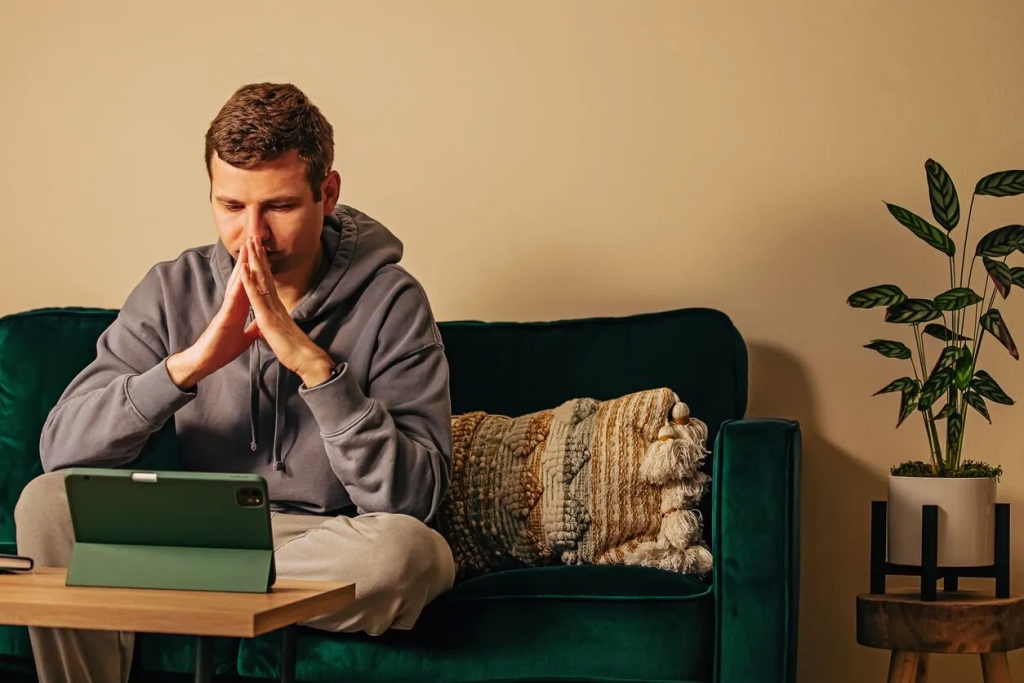
What to say when you don’t know what to say
Many people freeze at the beginning of a session, especially if it’s their first one or if they’ve never done telehealth.
Here are a few easy openings you can use:
“I’ve been nervous about starting, but I want support.”
“I don’t know where to begin, I just know I’ve been overwhelmed.”
“I want to talk about anxiety, stress, and how it’s affecting my life.”
“I’ve been carrying a lot and I’m tired of pushing through.”
“I’m not sure what my goals are yet, but I know something needs to change.”
Any of those is enough to start.
If you want, you can also write down three points before your session: what’s been hard, what you want help with, and what you hope will feel better. You don’t have to read it like a script. It’s just a lifeline if your mind goes blank.
Telehealth for psychiatry visits: what’s helpful to prepare
If you’re doing an online psychiatry appointment, the provider may ask more structured questions about symptoms.
Helpful things to have ready include:
How long symptoms have been present
How sleep has been (falling asleep, staying asleep, waking early)
Changes in appetite, energy, motivation, mood
Anxiety symptoms (racing thoughts, panic, dread, irritability)
Any previous medications or therapy experiences
Any medical conditions and current medications
You don’t need perfect answers. Estimates are fine. The goal is to give them enough info to support you.
If you’re exploring psychiatry options through Psychology for Black Girls, you can learn more through their Psychiatry Support page.
Telehealth for assessments: why prep can help
If you’re doing telehealth as part of an evaluation process, the provider may give specific instructions. For testing, they may ask for a quiet space, stable internet, and minimal interruptions.
If you’re exploring an evaluation pathway, you can start with Accessible Evaluations to understand what the flow looks like and what telehealth may involve.
During the session: how to feel more comfortable on camera
Here are telehealth therapy tips that make the actual conversation smoother.
Keep a glass of water nearby
It helps when you get emotional or dry-mouthed from anxiety.
Sit in a comfortable position
If you’re stiff and uncomfortable, you’ll feel more anxious. Comfort helps your body settle.
Use notes if you need them
It’s okay to look down. This is not a presentation.
Ask to slow down if you feel overwhelmed
You can literally say, “Can we slow down for a moment?” A good provider will meet you there.
Take breaks if needed
If you’re emotional, you can pause. Silence is allowed.
If you’re not in a private space, say so
You can say, “I’m in a place where I have limited privacy, so I may be careful with details today.” Your provider can adjust.
After the session: give yourself a transition
This is one of the most overlooked telehealth therapy tips. In-person appointments naturally have a transition: the drive, the walk, the change of environment. Telehealth can end and then you’re instantly back in your day.
Try giving yourself a 5–10 minute buffer if you can:
Sit quietly and breathe.
Write down a few words about what stood out.
Stretch your body.
Step outside for fresh air.
Listen to one calming song.
Drink water.
That small transition helps your nervous system integrate the session, especially after emotional topics.

If telehealth feels awkward, that doesn’t mean it won’t work
Most people need a few sessions to get used to telehealth. Feeling awkward at first is normal. It doesn’t mean therapy isn’t for you. It doesn’t mean you’re doing it wrong. It just means you’re adjusting.
If you give it a few tries, you’ll likely learn what makes it easier: headphones, a certain spot in your home, a certain time of day, a pre-session ritual, or a provider style that fits you.
A small reminder you can keep close
If you’re building a new habit of showing up for yourself, reminders help. Especially when anxiety tells you to cancel or postpone.
If you like wearable reminders that reflect mental wellness and community, you can browse the Psychology for Black Girls Shop and choose something that feels grounding for your season. It can be a simple cue on the day of your session that says, “I’m showing up, and that matters.”
Closing: make it easier, not perfect
Telehealth doesn’t need to be perfect to be helpful.
With a few small adjustments, you can protect privacy, reduce tech stress, and show up feeling a little more grounded. These telehealth therapy tips are meant to help you stop overthinking the setup so you can focus on the real reason you’re here: getting support that helps you feel better.
You deserve care that fits your life, not care that requires a perfect life to access it.